
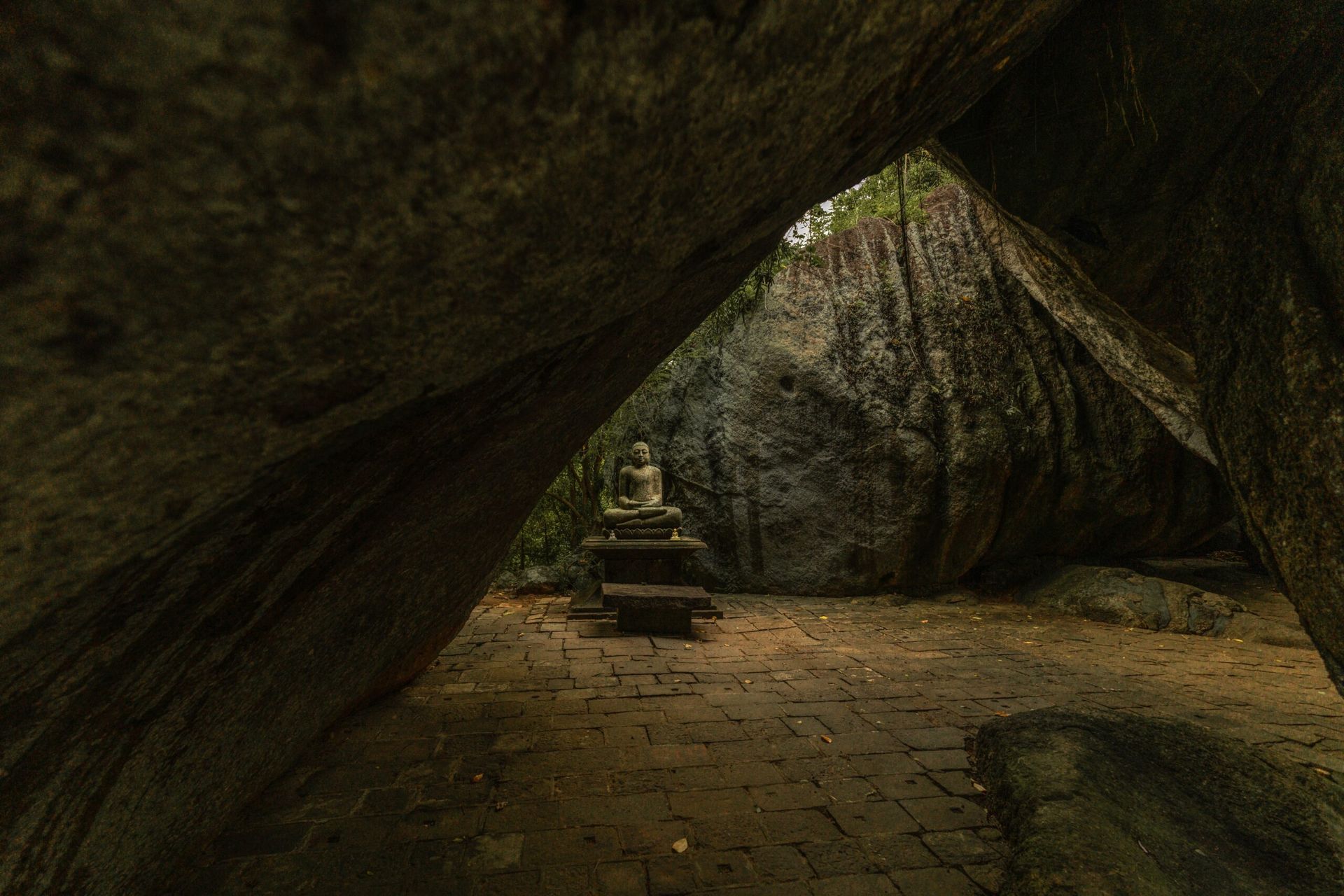
The most rewarding places to photograph around Galle include the ramparts and lighthouse of Galle Fort, Koggala Lake, the beachfront architecture of The Fortress Resort & Spa, Yatagala Temple and the working landscapes of the southern coast. Early morning and late afternoon offer softer light, while August’s changing skies can add movement and depth.
Galle rewards photographers who look beyond the obvious postcard. Its visual character comes from contrast: whitewashed walls against monsoon clouds, coral-and-granite ramparts beside open ocean, fishing craft on still inland water and tropical greenery surrounding Buddhist rock temples.
The strongest photographs are made by allowing these relationships to enter the frame rather than treating each landmark as an isolated object.
Galle Fort Ramparts
Begin at the ramparts. Galle Fort occupies a rocky peninsula at the south-western edge of the island, creating long sightlines over the Indian Ocean. The fort covers approximately 52 hectares and represents a fusion of European fortification principles with South Asian materials and adaptation.
Early morning brings quieter pathways, cooler light and fewer silhouettes. Late afternoon produces stronger contrast along the walls, particularly around Flag Rock and the lighthouse. Wide lenses suit the curve of the ramparts, while a longer focal length can compress figures, sea and architecture into a more graphic composition.
Avoid photographing only the horizon. Look for weathered stone, grass moving in the wind, people walking along the wall and the relationship between the fort and the living town behind it.
Galle Lighthouse and Lighthouse Street
The white lighthouse is one of Galle’s most recognisable structures, but its most interesting angles often come from further back. Frame it through palms, include the lower rampart walls or photograph along Lighthouse Street so that the tower becomes part of the urban fabric rather than a detached landmark.
The area is also useful for studying shadow. In the morning, doorways and projecting roofs create strong lines; later in the day, the white surfaces begin to reflect warmer light.
Hidden Streets and Courtyards
Church Street, Pedlar Street and Leyn Baan Street contain restored houses, old walls, internal gardens and shaded thresholds. The Fort’s architecture is best photographed slowly: partially open doors, worn shutters, tiled roofs and courtyards glimpsed through archways often reveal more than a symmetrical façade.
Always ask before entering or photographing private interiors. Many historic buildings remain homes, hotels, shops or places of worship rather than public sets.
Koggala Lake
Koggala Lake offers a completely different visual language. Its waterways, islands and mangrove edges are better suited to quiet, observational photography than dramatic panoramas. Herons, cormorants, kingfishers and other water-associated birds may be seen, but sightings should never be staged or guaranteed. Local boat excursions commonly include mangrove channels and cinnamon-growing islands.
Morning is often preferable because the light sits lower over the water and boat movement may be reduced. Use reflections, foreground reeds and the wake behind the boat to create depth. A polarising filter can help manage glare, although it may also remove the reflections that give the lake its character.
Yatagala Temple
Yatagala Raja Maha Viharaya sits among forest and granite boulders inland from the coast. The visual interest lies in scale: rock formations, stairways, trees, white temple structures and human figures moving quietly through the site.
Temple photography requires sensitivity. Dress appropriately, avoid interrupting worship, never pose disrespectfully with sacred images and ask before photographing monks or devotees.
The Architecture of The Fortress
The Fortress Resort & Spa draws on the character of Galle’s historic fortifications through white walls, axial courtyards, long verandas and strong symmetry. Tropical gardens and the Indian Ocean soften that structure, producing layered compositions where architecture, shadow and foliage interact. The property’s design positions it as a useful visual bridge between Galle’s historic architecture and contemporary coastal hospitality.
Morning light suits the courtyards and white façades. Sunset is better reserved for the infinity pool, ocean-facing lawns and wide coastal views.
Practical Photography Advice for August
August light can change quickly. Protect equipment from sudden showers, carry a microfibre cloth and avoid changing lenses in exposed windy conditions. Keep plans flexible rather than treating golden hour as guaranteed.
Most importantly, photograph the south coast as a lived region. Include craftspeople, food, boats, markets and architecture only with context and consent. The strongest travel photographs do not merely prove that a place was visited; they reveal how it is inhabited.